does tuna have bones

David Schmidt
Published Apr 05, 2026
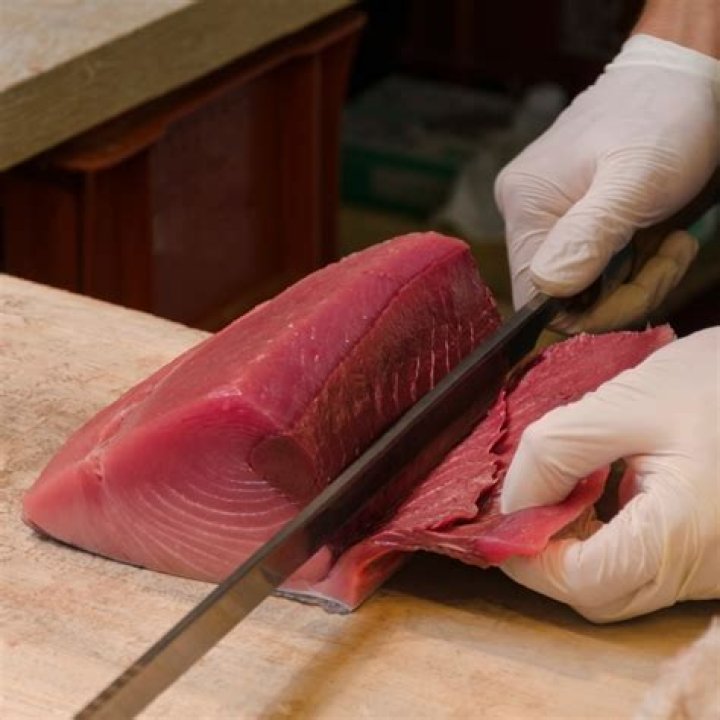
Another thing that makes tuna unique among fish is that you needn’t worry about bones – not that tuna does not have bones – it has plenty – but they are positioned so that each fish gives up 4 meaty ‘loins’ with absolutely no bones therein.
Can you eat bones in tuna?
On the off chance that you managed to accidentally eat the bones you found in your can of tuna, rest easy, because the bones themselves are almost certainly harmless. If anything, they’re a reasonably good source of extra calcium!
Is tuna a bony fish?
Trout, goldfish, tuna, clownfish, and catfish are all kinds of bony fishes. They live in both salt and fresh water.
How many bones does tuna have?
The bones encompass the entire vertebral column, the ribs, some fins and finlets, and all the bones in the enormous head—in fact, the heads alone have about 130 bones each!
Does tuna have cartilage?
This is the largest group of fish, including goldfish, tuna, trout, and catfish. They have skeletons made of bone rather than cartilage, and their bodies are covered by bony scales. They have a swim bladder, a balloon-like organ that is filled with oxygen and other gases from the bloodstream.
Can humans eat fish bones?
The truth is, fish bones are entirely edible, and in some parts of the world are even eaten on a routine basis. Bones are known to contain a variety of nutrients, such as iron and calcium that are actually good for your body.
Which fish is without bones?
And what kind of fish has no bones? Elasmobranchs (sharks, stingrays and rays) do not have hard (calcified) bones in their bodies. Instead, they have flexible cartilage, while other vertebrates (like you and me) have real bones.
Is it fine to eat fish bones?
Don’t Panic
If you’ve swallowed a fishbone and feel fine, you don’t need to see a doctor. If the bone didn’t scratch your throat on the way down, you shouldn’t have any further problems. It will eventually be eliminated and removed from your body by the natural digestive process.
Does a tuna have a four limbs?
Sharks and tuna both have fins that are fundamentally different from limbs, even those present in whales, revealing fins as the ancestral state of this character. Having four limbs is the derived state of Character 3, and the four tetrapod taxa that share the derived state are thus united in a clade.
What type of fish is bony?
bony fish, (superclass Osteichthyes), any member of the superclass Osteichthyes, a group made up of the classes Sarcopterygii (lobe-finned fishes) and Actinopterygii (ray-finned fishes) in the subphylum Vertebrata, including the great majority of living fishes and virtually all the world’s sport and commercial fishes.
What are the benefits of tuna?
20 Amazing Health Benefits Of Tuna Fish
It reduces your blood pressure. Tuna is rich in potassium – a mineral that lowers the blood pressure significantly. It improves your immune system. It reduces depression. It lowers triglycerides. It strengthens your bones. It prevents stroke. It prevents cancer. It builds muscle.
Does canned fish have bones?
Traditionally, salmon and sardines are canned bones and all. For the most part, the high heat processing used to sterilize the cans softens the bones to the point that they can easily be chewed.
Are there bones in canned fish?
Bones and spines are very common in fish flesh especially marine fishes. Bones are occasionally present in canned tuna, although every effort is made to remove them.
Does cod have bones?
Cod steaks are bone-in portions cut from the centre of the fish, like a cross-section, and the least expensive cut. Cod cheeks are skinless and boneless cuts sliced from the head.
What fish has a lot of bones?
Shad are especially bony, but northern pike, pickerel, carp, herring, squawfish, mooneye, buffalofish and many other fish are also born with extra sets of bones. Shad take the cake, though: They have 3,000 bones, but their meat is so tasty their Latin name is sapidissima—”tastiest.”
Does fillet have bones?
Because fish fillets do not contain the larger bones running along the vertebrae, they are often said to be “boneless”. However, some species, such as the common carp, have smaller intramuscular bones called pins within the fillet. The skin present on one side may or may not be stripped from the fillet.
Can you eat pin bones?
By and large, pin bones are soft and edible, unlike those bigger choking hazards that are attached to the backbone. In some cultures—we’re looking at you, Japan—fish bones are considered a delicacy. To the rest of us, even the most petite of pin bones aren’t exactly considered aesthetically pleasing.