how does water velocity affect the size of particle that running water can transport?

Ava Hudson
Published Apr 05, 2026
The size of particles that can be carried within a load is determined by the stream’s velocity. Faster streams can carry larger particles. Streams that carry larger particles have greater competence. Streams with a steep gradient (slope) have a faster velocity and greater competence.
How does particle size affect water flow?
The absolute velocity of different particles was less than that of water flow. Therefore, the smaller the particles or the larger the projected area, the stronger the ability to flow.
How does water affect velocity?
The volume of water that flows through a river within a given amount of time — known as the discharge — also affects its velocity. As the volume of water in a river increases, through smaller streams flowing into it, for example, the velocity of the river increases.
What happens when water moves with a faster velocity?
Water flowing over Earth’s surface or underground causes erosion and deposition. Water flowing over a steeper slope moves faster and causes more erosion.
How does the velocity of moving water affect the transportation of sedimentary particles?
One of the key principles of sedimentary geology is that the ability of a moving medium (air or water) to move sedimentary particles and keep them moving is dependent on the velocity of flow. The faster the medium flows, the larger the particles it can move.
Why is the velocity larger for the bottom stream of water?
Why is the velocity larger for the bottom stream of water? In fact, the velocity just below the surface is typically a little higher than right at the surface because of friction between the water and the air. On a curved section of a stream, flow is fastest on the outside and slowest on the inside.
What is the effect of increasing particle size on water retained?
Results demonstrate that given the same matric suction, soil water content decreases gradually with the increase of particle size and content of coarse particles, thus decreasing water retention capacity of soil accordingly.
What is the relationship between particle size and water permeation?
Smaller particles have a low permeability. This is because there is less space between particles, which causes a lower porosity, which makes water travel slower through the ground. Smaller particles have a higher capillarity.
How does particle size affect leaching?
The leaching rate can be greatly improved after a fine grinding process. The leaching efficiency of rare-earth elements was affected by different particle sizes more remarkably than temperature. Rare-earth extraction in the ore whose particle size is 95% distributed in 1.5 μm can reach 39.24%.
How velocity affects erosion in a river?
If the slope is too gentle and velocity is too slow to transport the sediments being supplied by weathering and erosion, the sediments will pile up. This increases the gradient which causes the water to flow faster which increases erosion and transport, which then reduces the gradient.
Does water depth affect velocity?
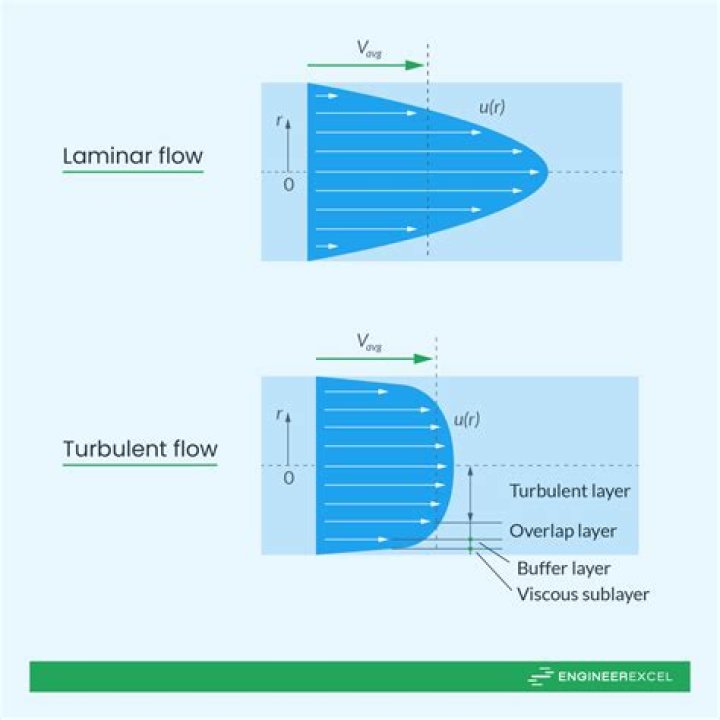
Water velocities are not the same in different depths. Highest velocity occurs below water surface, middle depth have lower velocity and the lowest velocity occurs in benthos section.
Which shape of the water channel would cause the fastest water velocity?
A narrow channel that is V‐shaped or semicircular in cross section results in faster flow; a wide, shallow channel yields a slower flow because there is more friction between the water and the stream bed. A smooth channel offers less friction than a rocky or boulder‐strewn channel, resulting in faster flow.
How will the work of a river be affected if the velocity of water is low?
Deposition takes place when the velocity of water is low. Volume of water — The larger the volume of water, the greater is the power of erosion and transportation. Deposition takes place better when there is reduced volume of water and when the load is greater.
How does water affect erosion?
Water flowing over Earth’s surface or underground causes erosion and deposition. Water flowing over a steeper slope moves faster and causes more erosion. … When water slows down, it starts depositing sediment, starting with the largest particles first. Runoff erodes the land after a heavy rain.
What happens when the velocity of a river decreases?
Near the streambed, shear in the vertical profile of velocity (rate of decrease of velocity with depth) tends to decrease downstream. This down-valley decrease of shear implies decreasing competence downstream.
What factor controls the size of particles that can be transported by moving water?
The size of the particles that can be carried as suspended load is dependent on the flow rate 11. Larger particles are more likely to fall through the upward currents to the bottom, unless the flow rate increases, increasing the turbulence at the streambed.
What is the relationship between water velocity and the rate of erosion?
What is the relationship between the water velocity and the rate of erosion? If the water velocity decreases, the rate of erosion increases.
What factor affects the size of the particles that can be carried in a stream?
Increased capacity means the stream volume carries greater quantity of sediment. Increased competence means stream load carries greater sedimentary particle sizes. Because of increased competence, the stream may gain enough competence to carry particles as large as “pebbles, cobbles and boulders” (Gale Cengage).